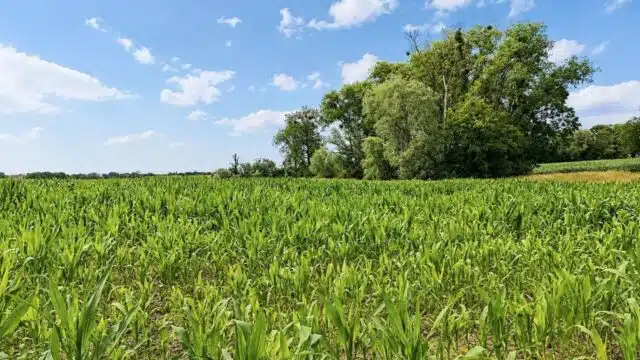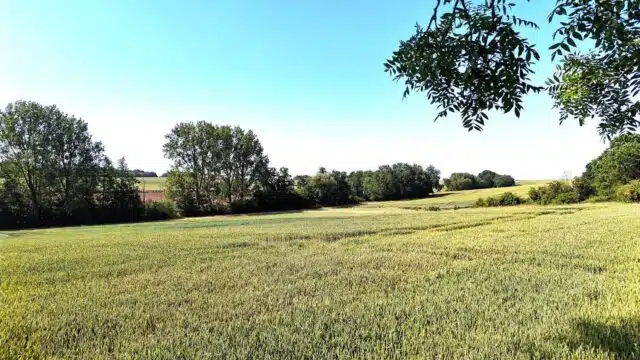
Determining the price of agricultural land in 2026 is a crucial step, whether you are a landowner, a prospective buyer or an investor in Belgium. The value of agricultural land is not fixed; it depends on a multitude of specific factors. This guide sets out the key factors to analyse in order to understand the market and obtain an accurate valuation, whether for pasture or arable land.

Owned or rented (farm lease): The primary factor affecting the price

The land use status is fundamental to the value of agricultural land.

  • Land free of tenancy: Land without a tenancy agreement (whether written or verbal) will have a significantly higher value. The buyer has complete freedom to use the land as they wish.
  • Leased land: Agricultural land held under a tenancy agreement is cheaper to buy, as its use is restricted by the current contract. It is essential to know the details of the tenancy agreement and the name of the occupier.

Location: The impact of agricultural land prices by region in Belgium

Location is undoubtedly the most important factor. The price of agricultural land for sale will vary drastically depending on its geographical location.

  • Prices by region: The price of agricultural land in Belgium varies considerably from region to region. Regions where demand is high or where land is scarce command higher prices.
  • Access and infrastructure: Easy access to a road suitable for vehicles, and proximity to motorways, local markets and towns can increase the property’s value.

Land area and soil quality: Agronomic potential

The potential productivity of the soil has a direct influence on the price:

  • Plot size: As a general rule, a larger plot has a higher total value, although the price per hectare may sometimes decrease as the plot size increases.
  • Soil quality: Fertile, well-drained soil with a good composition (silt, clay, sand) and suitable for high-yield crops is a major asset that justifies a higher price.

Farmland or grassland: How does this affect the price per square metre?

It is essential to distinguish between different types of land, as their value varies.

  • Arable land: Intended for arable crops (cereals, potatoes, etc.), its value is often higher due to its potential for profitability.
  • Pasture: The price per square metre of pasture in Belgium is generally lower than that of arable land. It is mainly used for livestock farming and haymaking.

Agricultural regulations and support schemes

The legal framework and funding play a significant role.

  • Local and European regulations: Restrictions (protected areas, environmental constraints) may limit activities and thus reduce value.
  • Aid and grants: The eligibility of agricultural land for aid (CAP, regional aid) can make it more attractive.

Access to water and nearby natural resources

Water is a vital resource in agriculture.

  • Water source: The presence of a well, access to a river or a functioning irrigation system is a significant added value that is reflected in the price of agricultural land.

The property market and the economic climate

The value of agricultural land is also subject to the law of supply and demand.

  • High demand: Strong pressure on land in a region, combined with a limited supply of agricultural land for sale, is driving up prices.
  • Economic conditions: Interest rates, inflation and the economic health of the agricultural sector influence buyers’ ability to invest.

Facilities and infrastructure available

A plot of land that is already serviced represents a saving on the buyer’s investment.

  • The presence of farm buildings (barns, sheds), fences, gravelled access roads or drainage systems automatically increases the value of agricultural land.

Environmental potential and sustainability

The latest trends are promoting sustainable practices.

  • Organic farming: Land that is certified organic or easily convertible to organic farming can attract a specific group of buyers who are prepared to pay a premium.
  • Biodiversity: The presence of hedges, ponds or other features that promote biodiversity can be an asset.

Conclusion: Getting a valuation of your agricultural land

To summarise, valuing agricultural land is a complex process. It must take into account the land’s current use, its location (which determines the price by municipality in Belgium), the quality of the soil, and the availability of water and infrastructure.

To obtain a reliable valuation and sell your agricultural land at a fair price, it is strongly recommended that you consult an expert in the agricultural land market.

Do you have any questions, or would you like an accurate valuation of your agricultural land?

They placed their trust in us

Our agricultural land for sale